
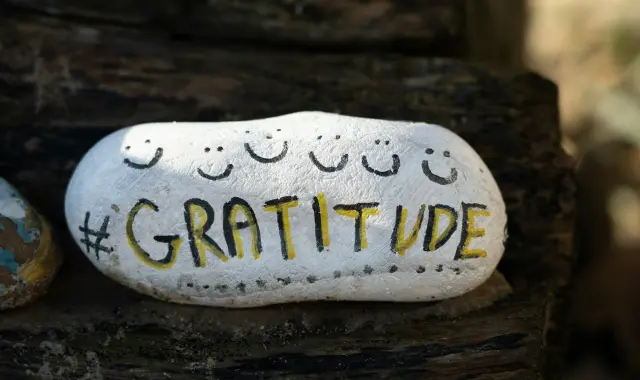
Gratitude is often celebrated as a constant companion to happiness — a feeling that we are encouraged to cultivate daily, preferably in the morning, before we even brush our teeth. We hear a lot about gratitude as an immediate practise; be thankful now, appreciate the moment, find the silver lining. But real life doesn’t always work that way. Some experiences don’t feel like gifts when they happen. Some lessons hurt too much to be grateful for in real time and that’s where delayed gratitude comes in — and why it may be one of the most important practices to carry into 2026.
Delayed gratitude is different from immediate thankfulness. It doesn’t present itself when someone hands you a gift or says a kind word. It creeps in quietly, sometimes decades after an event, a lesson, or even a moment of discomfort. As we move into a new year, delayed gratitude offers a more realistic, adult understanding of what gratitude meaning — one rooted in time, reflection and lived experience rather than instant appreciation.
What Gratitude Really Means as We Head Into 2026
The traditional gratitude meaning often focuses on immediacy: appreciation for what is good, comfortable, or rewarding in the present moment. While valuable, this definition is incomplete. It assumes that growth always feels positive and that clarity arrives quickly.
Delayed gratitude expands that meaning. It recognises that some of the most impactful moments in life only reveal their value much later. Rejection, failure, uncomfortable transitions, and difficult decisions may not inspire gratitude at the time — but they often shape us in ways we only understand years later.
As 2026 begins, redefining gratitude to include delayed understanding allows us to stop judging ourselves for not “feeling thankful enough.” Instead, we learn to trust that insight and appreciation can arrive on their own timeline.
The Lessons That Only Time Explains
In our twenties, we tend to evaluate experiences immediately. If something doesn’t work out, we label it a mistake. If it hurts, we assume it shouldn’t have happened. But with age comes a shift in perspective.
Looking back now, many of us can identify moments that once felt disappointing but later shaped who we became. A job that didn’t last. A missed opportunity. Feedback that felt unfair. At the time, gratitude felt impossible. Years later, clarity arrived and with it, delayed gratitude.
This form of gratitude is deeper because it’s earned through lived experience. It comes with context, self-awareness and emotional maturity. In 2026, choosing to acknowledge these delayed lessons is a powerful way to honour your own growth.
Delayed Gratitude and Career Reflection
Career paths rarely make sense while we are living them. Especially in adulthood, professional growth is often non-linear. We face setbacks, stagnation, and moments where effort doesn’t equal reward.
In the moment, these experiences feel frustrating and unfair. Gratitude feels out of reach. But years later, patterns emerge. That difficult role may have clarified your boundaries. That failed opportunity may have redirected you toward work better aligned with your values.
Delayed gratitude allows us to look back without bitterness. It helps us understand that progress is not always visible when it’s happening. As we step into 2026, practising delayed gratitude can transform how we view our professional past — not as wasted time, but as preparation.
Why Delayed Gratitude Feels More Authentic
Delayed gratitude makes sense because understanding often comes with time. We don’t always see the value of an experience while we’re still in the middle of it. Emotional clarity often comes only after intensify fades. When we give ourselves time, we can integrate experiences into a larger life narrative rather than judging them in isolation.
That’s why delayed gratitude often feels more authentic than immediate appreciation. It’s not performative. It’s not rushed. It’s rooted in understanding rather than obligation.
As the pace of life continuous to accelerate, choosing delayed gratitude in 2026 is a quiet act of resistance. It’s a reminder that not everything needs to be understood or appreciated right away.
Making Delayed Gratitude a Practise in 2026
You don’t need a gratitude journal or a rigid routine to practise delayed gratitude. What you need is openness.
Start by revisiting moments you once labelled as failures. Ask yourself what they changed in you. Consider how certain struggles shaped your perspective, resilience, or decision-making. This is not about romanticising hardship — it’s about acknowledging its impact.
You can also practise patience with your current challenges. Some forms of gratitude are still unfolding. Trusting that meaning may arrive later is itself a form of wisdom. As 2026 begins, delayed gratitude invites you to stop demanding instant clarity from life.
Heading Into 2026 With Perspective
As we move into 2026, delayed gratitude offers a more mature understanding of gratitude meaning — one that honours time, complexity and growth. It reminds us that appreciation does not have to be immediate to be real.
Some of the moments you struggle with now may one day inspire quiet gratitude. When that happens, it won’t feel loud or celebratory. It will feel steady, grounding and deeply personal.
And perhaps that’s the most valuable lesson to carry into 2026:
Gratitude doesn’t have to arrive on time to be meaningful. Sometimes, the most powerful gratitude is the kind that comes later — once you finally understand what something gave you.